

 LinkedIn
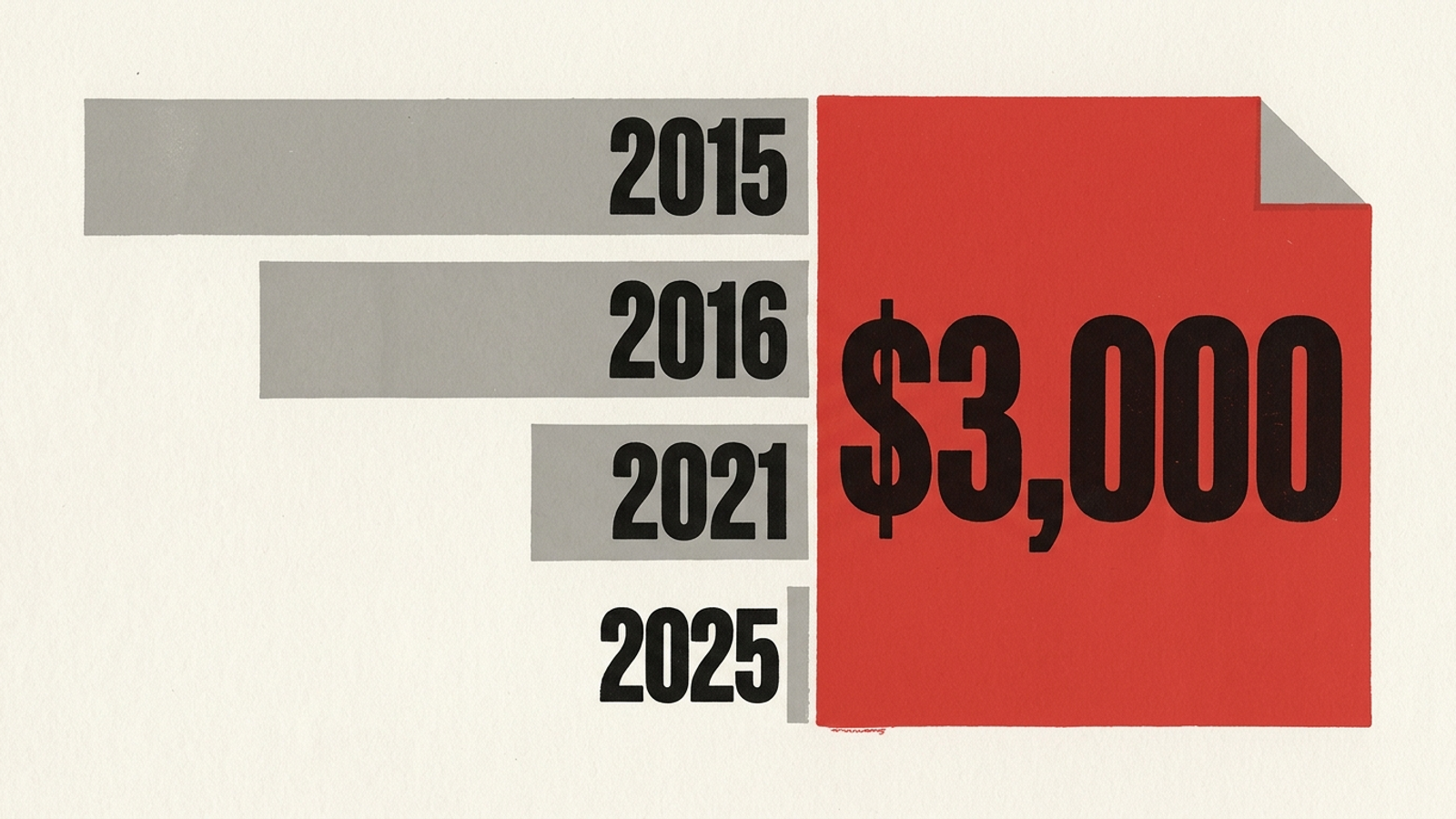
Most agencies won’t tell you this: the 15% of spend fee was priced for work that has been automated in stages. On a $20,000 monthly ad budget, that fee is $3,000. It made sense when a manager could spend 40 hours building match-type structures, adjusting bids and mining negatives by hand. Bidding, matching and even keyword selection changed. The invoice mostly didn’t.
I’m not arguing that an automated account needs no manager. It needs someone who understands what the system is being asked to produce and whether the reported result is worth buying. That is a different job from maintaining hundreds of tiny bid and keyword decisions, and it should be priced like one. Here’s the timeline of how the old work shrank while the percentage survived.
2002 to 2015: the 15% fee paid for hands-on control
Google Ads began with Exact and Phrase match in 2002, added Broad in 2006 and Modified Broad in 2010 (match-type history). For practitioners, more match types meant more ways to control where ads appeared, provided someone built and maintained the structure. A tightly managed account could mean one keyword per ad group, separate match-type copies, bids adjusted in spreadsheets, and search term reports checked for queries that did not belong.
That control had a labor cost. On a $20,000 account, 15% bought $3,000 a month of query review, negative mining, bid changes, copy maintenance and structure repair. Not every account needed the same hours, but the work was real. If a bad query started eating budget, someone had to find it and stop it. If a bid no longer made sense, someone had to change it.
Automation was already arriving: Conversion Optimizer appeared in 2007, followed by other automated options in 2010. Still, the operating model of this period explains why the percentage fee took hold. Spend and hands-on maintenance could rise together. The original case for 15% was labor, not magic. Keep that premise in mind as the labor changes.
2016: Smart Bidding takes over the bid decision
Google introduced Smart Bidding in 2016, building on its earlier automated bidding tools. The practical shift was from a manager setting a bid that stayed put until the next edit to a system setting bids at each auction using conversion history and contextual signals. A person could not review and calculate every auction-level decision in the same way.
That did not make strategy obsolete. Someone still had to decide which conversions mattered and whether the data feeding the system was sound. But downloading performance, segmenting it, nudging CPCs and repeating the exercise stopped being the centre of the job. Manual adjustments by device, location and schedule no longer justified the same hours simply because they had once filled the calendar.
Take the $20,000 account again. At 15%, the invoice was still $3,000 after much of the bid-changing work moved into the auction. A manager might spend the freed time improving conversion signals or landing pages. Good. Then the fee should be explained by that work and its value, not by the bid-management hours it replaced. Ask what the manager does now, not what the contract covered in 2015.
2021: match-type maintenance loses its old purpose
Smart Bidding changed the bid. Matching then weakened the old argument for elaborate keyword silos. Between 2014 and 2017, Google expanded close variants for Exact and Phrase. In 2021, it removed Modified Broad and folded that behaviour into Phrase (match-type timeline). The dates overlap the bidding shift, but the cumulative effect matters here: a keyword structure no longer gave managers the same query-level control it once promised.
An Exact keyword could match beyond its literal wording. Queries could cross the neat borders built between ad groups. Maintaining three versions of every silo became harder to defend when the matching system did not respect those borders in the old way. The useful work shifted toward deciding what to exclude, where to consolidate and which signals deserved enough data to guide bidding.
I would be skeptical of anyone claiming consolidation automatically improves every account. The SKAG consolidation writeup describes one SaaS takeover where cost per opportunity fell 6% in month one and 27% in month two after an Alpha-Beta structure was collapsed. That is a case, not a universal forecast. It does show why maintaining a complicated structure should no longer count as value by itself.
A full account is not proof of a well-managed account. If the structure exists mainly to create maintenance work, stop paying for its upkeep as though it were the strategy.
November 2021 to late 2022: Performance Max removes the keyword levers
Google introduced Performance Max in November 2021. Smart Shopping upgrades began in April 2022, Local campaign upgrades followed from June, and the old campaign types were phased out by the end of Q3. For practitioners, this was more than another bidding change. Performance Max could run across YouTube, Search, Discover and Display using assets, feeds and audience signals rather than a manager’s keyword list.
The manager still had inputs to manage: feed quality, creative, exclusions and the business goals behind the campaign. But the old pitch about hand-tuning each keyword and bid did not describe that work. Nor could the manager show the same query-by-query path behind every dollar spent. Less visible machinery should make an agency more precise about what it controls, not more comfortable charging for tasks it cannot perform.
Say $8,000 of a $20,000 monthly budget runs through Performance Max. A 15% management fee assigns $1,200 to that slice of spend. The question is not whether it deserves oversight. It does. The question is why its fee should scale as if someone were doing $1,200 worth of keyword-level maintenance inside a campaign without those levers. Price the inputs and oversight you actually get.

May 2025: AI Max moves more Search work into the system
Google introduced AI Max for Search in May 2025 as an upgrade within Search, not a separate campaign type. Its three relevant mechanisms were expanded term matching, text asset customization and Final URL expansion. It kept the campaign’s bids, budgets and structure while moving more query matching and copy assembly into automation.
Google’s launch figures claimed about 14% more conversions at similar CPA, and up to 27% for keyword-restrictive campaigns. Treat a vendor average as direction, not a promise for your account. The pricing implication does not depend on achieving that average. If software assembles more of the matching and assets, a management fee needs to buy judgment about what the software should do, what it must not do and whether the conversions are useful.
That leaves plenty to inspect. Someone must assess the landing pages, creative and constraints before applauding a conversion count. But calling all of that “keyword management” is like billing for typing after the document has written itself. The work did not vanish; it changed category. The fee should acknowledge the change.
2026: the pricing grid still rewards higher spend
Despite those changes, percentage of spend remains a common quote structure: roughly 10% to 20% of monthly media, often with a minimum or a base fee. The 2026 tier breakdown puts smaller accounts at 15% to 20% or a $500 to $1,500 minimum; $10,000 to $50,000 accounts at 10% to 15%; and $50,000 to $100,000 accounts at 8% to 12%. Larger accounts get custom pricing.
Those tiers are not proof that every agency overcharges. They do show the model’s weak spot. A $2,500 account with a $1,000 minimum pays an effective 40% management rate. At the other end, growing spend from $20,000 to $50,000 at an unchanged 15% raises the monthly fee from $3,000 to $7,500. That is $4,500 more each month without, by itself, establishing that the work increased by the same proportion.
Other quotes take different shapes. Published ranges include flat retainers of $1,500 to $10,000-plus, hourly rates of $100 to $300-plus, freelancers at $500 to $3,000 and mid-size agencies at $1,500 to $5,000. A lower headline price does not settle the question if setup, creative or tracking sits outside it. Compare the complete bill, not the neatest number in the proposal.
One $20,000 account: listed fees versus the rest of the bill
On $20,000 a month in media, the illustrated recurring totals below run from $22,500 to $28,000 before separately billed work. The flat-fee sprint is a one-off example, so it does not belong in that recurring range. These are different contract structures, not four quotes for identical scope. For a broader side-by-side, see the five-model pricing comparison.
| Model and figure source | Listed management charge | Recurring total including $20,000 media | One-off or hidden costs to check |
|---|---|---|---|
| Percentage of spend: 10% to 20% range and $20,000 example | 15% example: $3,000/month | $23,000/month before extras | Ask whether setup, creative, feeds and tracking are separate. |
| Flat retainer: $1,500 to $10,000-plus range; $1,500 to $5,000 mid-size agency range | Illustrative fee within that range: $2,500/month | $22,500/month before extras | Check setup and production scope; the fee need not rise with spend. |
| Revenue-based: 5% to 15% of attributable revenue range | Illustrative 10% of $80,000 attributable revenue: $8,000 | $28,000 in that illustrative month, before extras | Agree attribution, refunds and the needed CRM or offline data first. |
| Flat fee for a defined target: 90-day sprint example | Flat fee, once, quoted on the fit call | Not a recurring monthly illustration | Define the sprint’s scope and any later monthly fee separately. |
The listed cost is what the pricing grid makes easy to see. The hidden cost is work the grid may leave out: setup, landing page changes, feed fixes, call tracking and time spent settling attribution disputes. Some of that is one-off; some can recur. A result-based contract in particular needs a shared definition of attributable revenue before the first bill, not after a good month makes the definition expensive. Where a vendor cannot put scope and price on the same page, the apparent bargain is not yet a comparison.
Of these examples, the cheapest mistake is accepting a $1,000 minimum on a $2,500 test account without noticing the 40% effective rate. It hurts, but the test can end. The most expensive is letting an uncapped 15% fee follow a steady climb from $20,000 to $50,000 in spend without asking what additional work earns the extra $4,500 a month. A percentage that rises automatically deserves scrutiny automatically.
2026, now: pay for the decision, not the babysitting
What remains worth paying for? Conversion tracking that reflects valuable actions. Offline inputs that distinguish a qualified lead from a form fill. Feed and creative quality. Landing pages that keep the ad’s promise. Budget guardrails across Search, Performance Max and AI Max. Those are decisions and checks that shape what automation optimizes toward. They are not a monthly recital of bid tweaks.
I would put the commercial terms in writing before judging any management model:
- Define the work. What does the manager control, review and change each month? Do not accept “optimization” as an itemized service.
- Define the price as spend grows. Cap or tier a percentage instead of assuming today’s rate should apply forever. If a campaign type gets a different scope of work, discuss its place in the fee base.
- Define a result before paying for one. Agree the attributed number, refunds treatment and qualified-lead definition before a revenue-based fee starts.
- Put the target beside the flat fee. If the proposed job is strategic judgment, make its scope and success measure visible on the same page as the price.
A percentage can still fit a business whose spend swings widely and that wants its fee to fall with it. A short test may also make a minimum fee simpler than building the capability in-house. But if spend rises steadily while the monthly action log stays thin, ask for a different structure. The current agency pricing grids are useful context; they are not a reason to accept the default. Nor is the old agency headcount model inevitable, as the case for replacing it argues.
My reading of this timeline is simple. Every step moved more execution into the system and made the remaining human decisions more important. The next sensible invoice is flat for accountable judgment, with a bonus only for revenue both sides can see in the CRM. Stop paying keyword-work prices for work the keywords no longer require.